Home/Reports/2025

Annual Report 2025

Strategic directions, achievements, results and recommendations for 2025.

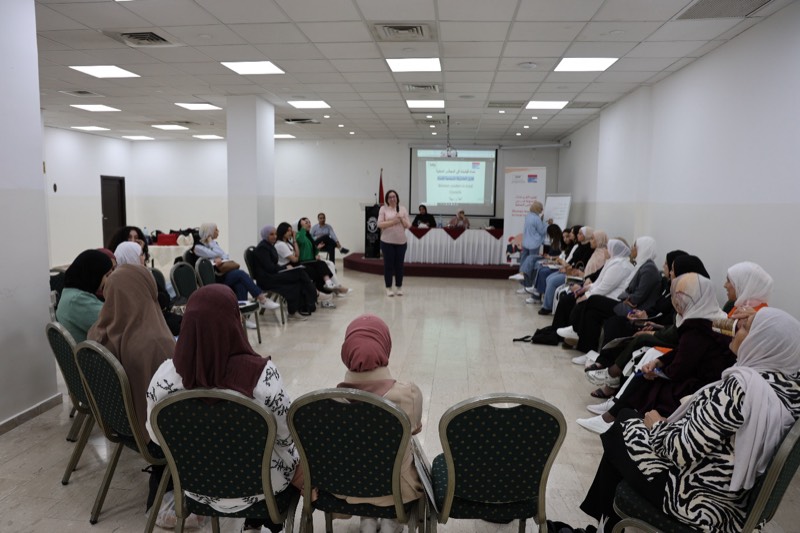
Women Leaders in Local Councils training · 2024 — © HDIP · Photography & credits

Strategic directions

Throughout 2025, our strategy focused on advancing community development by directing our efforts and resources toward unlocking the potential of groups most in need of support, particularly young people and women. These interventions reflected our firm belief that the progress and prosperity of Palestinian society are closely linked to empowering its vital pillars across four interconnected areas: health, education, empowerment and self-reliance.

Key figures

2025
  • 11,500+direct beneficiaries across all programmes
  • 1,460students trained in first aid across 73 courses
  • 3,216students in intensive remedial classes in Gaza
  • 181employment opportunities created

PDF not yet supplied

Four strategic directions

01

A development vision for comprehensive community empowerment

HDIP positioned health education and awareness as a key pillar for improving public health and strengthening community awareness, delivering awareness and educational programmes through interactive sessions and discussion forums in academic institutions and schools, complemented by digital campaigns on social media.

  • Promoting mental health and community resilience.
  • Increasing awareness of reproductive health and family well-being.
  • Promoting healthy nutrition and healthy lifestyle practices.
  • Strengthening prevention and reducing the spread and impact of chronic diseases.
02

Women's economic empowerment and vocational skills development

Recognising women's economic independence as a foundation for resilient communities, HDIP ran specialised workshops and courses in areas with growing demand in the local market, going beyond technical skill into small-business management, entrepreneurship and innovation.

  • Beauty and hairdressing — practical skills for small businesses or employment.
  • Photography and digital production — visual content skills opening freelance pathways.
  • Resin crafts and handicrafts — creativity combined with income generation.
03

Strengthening scientific research and the academic environment

HDIP positioned scientific research as a pathway for strengthening education, leading specialised seminars, awareness lectures and interactive workshops.

  • Encouraging researchers and emerging academics to adopt sound research methodologies.
  • Strengthening community awareness of research as a tool for knowledge generation.
  • Supporting evidence-based learning and the addressing of strategic challenges.
04

Advancing knowledge integration through the Right to Education projects

HDIP continued to implement and manage the Right to Education project as a practical model for integrating educational and awareness-raising interventions.

  • Addressing learning gaps resulting from exceptional and challenging circumstances.
  • Promoting critical thinking, problem-solving and positive community engagement.
  • Incorporating public health concepts into non-formal and extracurricular learning.

Key achievements and results

  • Health activities and programmes73 first aid courses for 1,460 students; 8 women's mental health courses for 160 women; 6 health education workshops for 420 students — approximately 2,040 direct beneficiaries from the main health activities.
  • Women Able to Change Society4 governorates through 16 local sites; 100 participants in "Skill and Idea" training; 5 product exhibitions with 100 beneficiaries; 14 displaced women employed across two children's camps reaching 380; 50 women in evaluation, psychosocial support and a winter mental health camp; 12 coordination meetings, 10 alliance-building meetings, 4 roundtables and a concluding seminar for 52.
  • Right to Education and its components100 awareness sessions producing an 80% rise in awareness; 3,300 students through 8 centres; 3,216 students in Gaza through 67 remedial classes; 768 students in research, technology and life-skills workshops; 200 students from 8 universities in the research ethics campaign; 130 scholarships; 170 students in rights-based workshops; 1,100 school students across 34 remedial classes; 181 employment opportunities created.
  • Women Leaders in Local CouncilsA 30-hour intensive for women activists and prospective candidates from diverse geographic and marginalised areas, after which a number expressed their intention to pursue candidacy.
  • Strengthening Young Leadership in UniversitiesA 30-hour intensive covering democratic leadership, human rights, advocacy and campaigning, with noticeable improvement in academic performance, self-confidence and inter-university networking.
  • Overall impactMore than 11,500 direct beneficiaries, 181 employment opportunities, and dozens of networking, coordination and awareness events strengthening cooperation with civil society, academic and community institutions.

Monitoring, evaluation and lessons learned

  • Pre- and post-assessmentsUsed to measure improvements in participants' knowledge and skills, particularly in vocational and rights-based training.
  • Field reports and meeting minutesContinuous documentation through trainers' reports, field coordinators' reports, meeting minutes and field visit records.
  • Focus group discussionsCollecting participants' experiences, testimonies and success stories, particularly from displaced women and children in the camps.
  • Flexibility in crisis managementPsychological first aid, emotional release and crisis management showed that psychosocial support and adaptability are essential to development work in unstable environments.
  • Linking skills with economic opportunityWomen's economic empowerment is a pathway to social and rights-based empowerment; greater financial independence strengthens capacity to participate.

Recommendations

  • Expand career guidance programmesCover a wider range of fields and specialisations, with greater emphasis on practical training and hands-on learning.
  • Develop an online platformFacilitate communication among students, trainers and parents, and the exchange of information, materials and resources.
  • Increase cultural and arts activitiesPromote cultural awareness and strengthen recognition of the role of arts in community development.
  • Strengthen volunteer engagementFoster social responsibility while developing leadership, teamwork and civic engagement skills.
  • Targeted training for women with disabilities and unemployed youthWith a particular focus on empowering marginalised and underserved groups.
  • Establish a permanent coordination mechanismBetween civil society and government institutions, with annual forums for knowledge and experience sharing.
  • Build a unified digital beneficiary databaseTo track beneficiaries' development pathways and support systematic measurement of longer-term outcomes.
  • Expand geographic coverageExtend the three projects into Area C, refugee camps and the most marginalised communities.
  • Establish an HDIP Alumni NetworkTo sustain long-term networking and strengthen youth and women's networks nationally.

2025

11,500+direct beneficiaries across all programmes
1,460students trained in first aid across 73 courses
3,216students in intensive remedial classes in Gaza
181employment opportunities created

Read another year

Annual reporting from 2022 onward sets each year's directions, activities and recommendations side by side.