Home/Projects/Right to Education
Right to Education
Keeping students learning through closure, displacement and war.
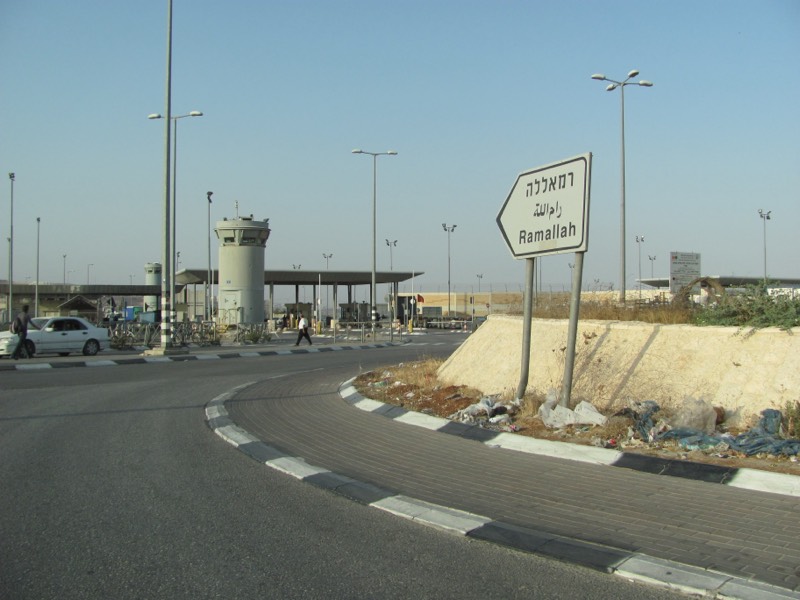
Checkpoint on the road to Ramallah — MotherForker · CC BY-SA 3.0 · Photography & credits
At a glance
The Right to Education Project aims to support a generation of Palestinian students who are better equipped to develop themselves and contribute to their communities, particularly in marginalised and underserved areas. Despite significant challenges — school closures, violence, displacement, interruptions to education and the war in Gaza — HDIP continued implementing the project in 2024 through an emergency-adapted approach across eight governorates, including Gaza.
At a glance
Ongoing · 2024- Governorates8, including Gaza
- Target groupSchool and university students
- Participants8,321 in 2024
- Activities345 in 2024
A school you cannot reach
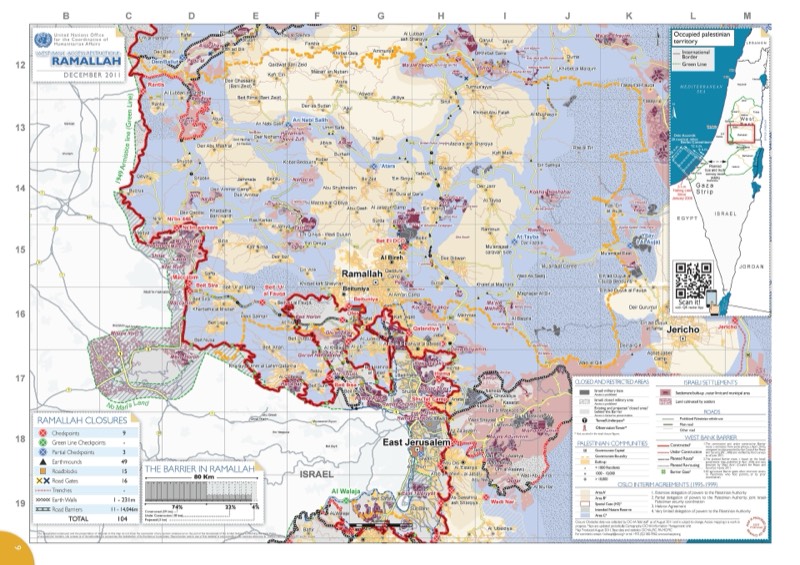
The Right to Education Project runs across eight governorates including Gaza. What that costs is visible in documents like this one: the December 2011 humanitarian atlas recorded 104 closures in the Ramallah governorate alone — checkpoints, partial checkpoints, earthmounds, roadblocks, road gates, trenches and earth walls. Closure is why the project is delivered through local centres rather than from one place, and why 2024 ran on an emergency-adapted plan.
Objectives
- Raise students' awareness of the importance of education as a means of individual and community development.
- Strengthen students' scientific, analytical, creative and problem-solving skills, improving their future educational and employment opportunities.
- Provide educational and skills-based training for school students, particularly those from disadvantaged and marginalised backgrounds.
- Support students to improve academic performance, particularly in science, mathematics and languages.
- Address learning gaps resulting from COVID-19 disruptions, interruptions to education and teachers' strikes.
- Contribute to reducing school dropout and support students in identifying appropriate educational and university pathways.
- Develop students' life skills, communication skills and ability to overcome challenges.
Activities and outputs
- Trainer evaluation and capacity buildingEvaluation meetings with trainers across project locations — face to face in Ramallah and Abu Dis, online with Nablus, Tulkarm, Jenin, Bethlehem and Hebron. Meetings were documented through formal minutes, and produced corrective action plans and monthly work plans for each centre.
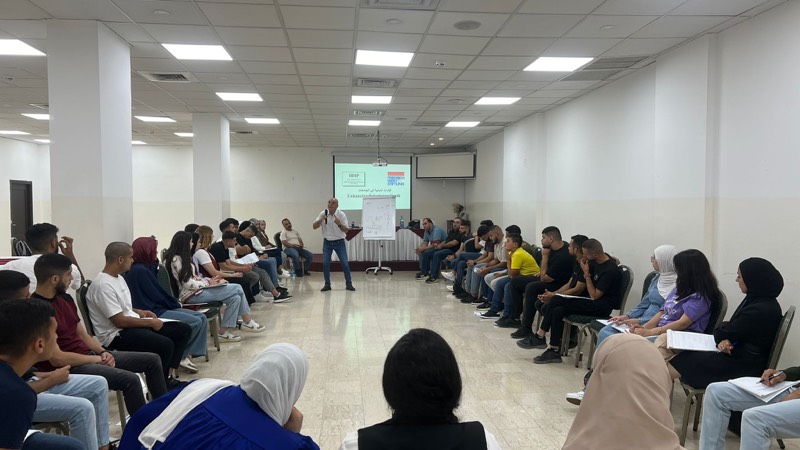
- Awareness workshops on the importance of education112 workshops in Hebron, Bethlehem, Abu Dis, Ramallah, Tulkarm, Jenin and Nablus, covering cyberbullying and online exploitation, effective communication, scientific research skills, choice of specialisation, dropout risks, and the importance of education and reading.
- School educational and training courses170 courses through centres in the West Bank and Gaza — English, mathematics, physics, Arabic, computer skills, science and life skills. Each course ran roughly 10 to 20 sessions, targeting grades 7 to 11, with particular attention to subjects where students experienced difficulty.
- University educational and training courses63 courses for university students in the West Bank, covering communication skills, Microsoft Office, Bisan accounting software for accounting students, scientific research and management skills.
2024
| Activity | Activities | Participants | Male | Female | With disabilities |
|---|---|---|---|---|---|
| Right to Education workshops | 112 | 2,842 | 1,319 | 1,523 | 121 |
| School courses | 170 | 4,403 | 1,565 | 2,838 | 210 |
| University courses | 63 | 1,076 | 348 | 728 | 24 |
| Total | 345 | 8,321 | 3,232 | 5,089 | 355 |
Results · 2025 / 2024
Two complementary pathways: awareness against dropout, and academic capacity.
Despite complex field and political challenges the project maintained a high level of continuity and strong implementation rates, supported by the flexibility of project teams, the competence of trainers, and continuous cooperation with schools and universities.
A second strand, the Right to Education Support Project 2, responded to the financial and academic barriers facing students through scholarships, skills development, rights-based advocacy and remedial teaching. Implementation rates for most targeted results ranged between 95% and 100%.
- 100 awareness-raising sessions, producing an 80% increase in participants' awareness of the importance of education.
- 3,300 students reached through the general training programme, delivered via 8 centres at 144 training hours per centre.
- 3,216 students in the Gaza Strip reached through intensive remedial courses across 67 classes in 3 locations.
- 768 students (460 female, 308 male) in workshops on scientific research, technology and life skills.
- 200 students from 8 local universities in the Scientific Research Ethics Campaign.
- 130 students (96 female, 34 male) received scholarships covering tuition and educational costs, at a 95% implementation rate.
- 170 students (45 female, 125 male) in rights-based workshops on the Right to Education.
- 1,100 school students in an intensive remedial programme across 34 classes, delivering 3,129 actual teaching hours.
- 181 permanent and temporary employment opportunities created for educational and administrative personnel.
Results reported for 2024.
- 345 activities implemented across the targeted areas.
- 8,321 participants reached, 61% of them female.
- 355 persons with disabilities participated in project activities.
- Educational support extended to students affected by conflict, displacement and interruption to formal education, including in displacement settings in Gaza.
Work with this project
HDIP partners with donors, councils and community organisations on delivery, training and evaluation.