Home/Our Work/Research, Policy & Knowledge
Research, Policy & Knowledge
Scientific research, evidence and knowledge-sharing as the basis of policy.
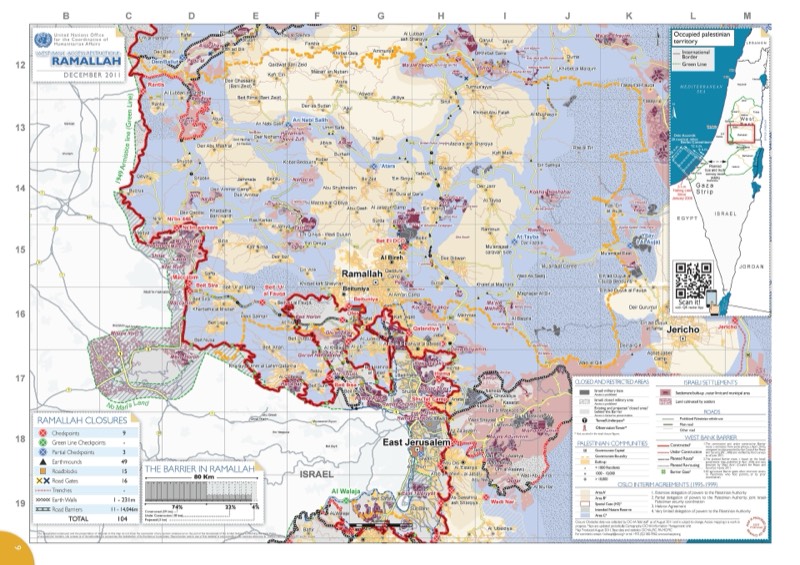
Ramallah closures — UN OCHA Humanitarian Atlas, December 2011 — UN OCHA oPt · CC BY 3.0 · Photography & credits
What we do
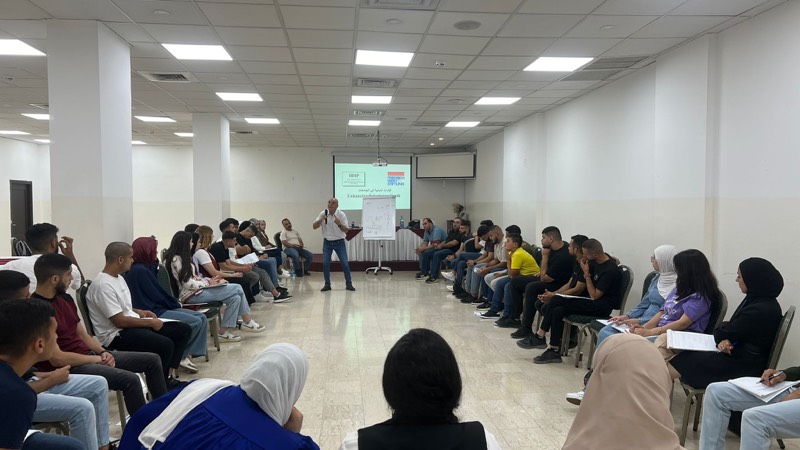
HDIP conducts research and studies on health and development conditions and policies, and works to raise awareness of the value of scientific research among students, researchers and academic communities. In 2024 this took the form of targeted campaigns, workshops, lectures and seminars, alongside the dissemination of educational material.
- Research campaignsWorkshops, lectures and seminars encouraging students, researchers and academic communities to engage in research.
- Knowledge disseminationPublishing information and educational materials related to health and development.
- Research clubsA scientific research club established in each library to encourage inquiry and critical thinking.
- Capacity buildingSpecialised training in health education, health systems and preventive approaches for community members, particularly women and youth.
- Policy dialogueCoordination activities to improve cooperation between civil society organisations and ministries.
2024
Community research and knowledge libraries 2022
A continuation of the Supporting Libraries Project in the West Bank and Gaza Strip, providing academic assistance to students — particularly students in need and students with disabilities.
HDIP established eight libraries holding approximately 15,000 books. The collections were later updated and expanded to roughly 40,200 books, including cultural and scientific books, references, periodicals, academic textbooks adopted by local universities, and encyclopaedias across scientific, cultural, social, political, literary and legal fields.
The libraries are managed by a team of eight trained librarians, supported by approximately 80 university student volunteers who classify and organise books, lend to users, and coordinate training courses and other activities. They are located across eight Palestinian governorates.
Facilities
- An electronic research room with computers connected to the internet.
- Training rooms used for educational activities and documentary screenings.
- A systematically and electronically catalogued collection.
- Dedicated spaces for reading and research.
Services
- Academic and cultural book lendingReducing the financial burden of purchasing textbooks.
- Computer and internet accessLaboratories for educational and research use.
- Printing and photocopyingAvailable to all students.
- Specialised academic and skills coursesIncluding empowerment and personal skills development, supporting access to employment after graduation.
Workshops run through the libraries
- Inclusion and integration of persons with disabilities.
- Educational policies in Palestine.
- The importance of scientific research.
- Development of information systems.
- Raising awareness about education.
- The status and quality of higher education in Palestine.
- The role of civil society organisations in educational policies.
- Freedom of movement and accessibility of educational institutions for persons with disabilities.
Partner with us on this work
HDIP works with local and international partners on research, training, evaluation and community programmes.