
Home/Projects/Young Leadership in Universities
Young Leadership in Universities
University students as active, responsible and community-oriented leaders.
Central market, Ramallah — Rawan.nassrallah · CC BY-SA 3.0 · Photography & credits
At a glance
The project aims to empower university students to play an active role in building a more informed and progressive society. It invests in young people's potential by providing them with knowledge, leadership skills and practical tools to engage constructively in their universities and communities.
At a glance
Ongoing · 2024- Format3-day intensive
- Target groupUniversity students
- FocusLeadership, rights, advocacy
- PartnerFriedrich-Ebert-Stiftung
- PartnerFriedrich-Ebert-Stiftung
Objectives
- Increase knowledge and awareness of leadership, community participation and civil rights among university students.
- Develop leadership skills through practical workshops and training focused on teamwork, decision-making and effective communication.
- Promote community engagement by encouraging students to participate in volunteer activities and local initiatives.
- Build a youth leadership network that facilitates exchange of experience and ideas among students from different universities, and encourages cooperation between academic institutions and local communities.
Activities and outputs
- Leadership trainingPrinciples of participatory and democratic leadership, respect for diversity and different opinions, and teamwork and collaborative decision-making.
- Human rights educationFundamental human rights and civic rights, mechanisms for promoting and defending rights, and human rights issues in local and international contexts.
- Advocacy and campaigningIdentifying community issues and priorities, planning advocacy campaigns, developing messages and approaches for community engagement, and using advocacy tools to influence relevant policies and practices.
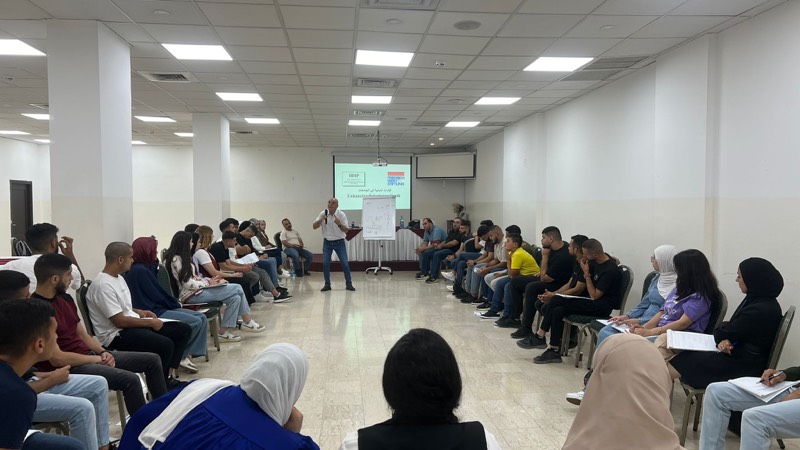
Results · 2025 / 2024
A 30-hour intensive across democratic leadership, human rights and advocacy.
Delivered over three consecutive days of focused programme activity.
- Democratic leadership: participatory approaches, collective leadership, and respect for diversity and pluralism.
- Human rights and the international framework: fundamental rights, international instruments, and mechanisms for promoting and defending them.
- Advocacy and campaigning: strategic planning skills and practical tools for designing and running campaigns.
- Strengthened critical and analytical thinking, supporting more informed decision-making.
- Increased self-confidence alongside noticeable improvement in academic engagement and performance.
- Expanded social and professional networks across universities, overcoming geographic separation between campuses.
- Improved employability skills — time management, leadership, communication, negotiation and teamwork.
Results reported for 2024.
- Increased self-confidence — practising leadership and communication skills gave students greater confidence in expressing their ideas and taking part in group activities.
- Strengthened social and professional relationships through interaction with peers and academic stakeholders.
- Improved leadership and practical skills — teamwork, communication, decision-making, leadership and advocacy, transferable to future study and employment.
- Enhanced critical thinking — interactive discussion encouraged students to analyse issues, weigh perspectives and make informed decisions.
- Increased community engagement — students came to see themselves as active participants in their communities.
- Stronger youth leadership potential, combining leadership training, human rights education and advocacy skills.
Work with this project
HDIP partners with donors, councils and community organisations on delivery, training and evaluation.