Home/Reports/2022

Annual Report 2022

Health, education and social and economic justice, delivered largely through the community knowledge libraries.

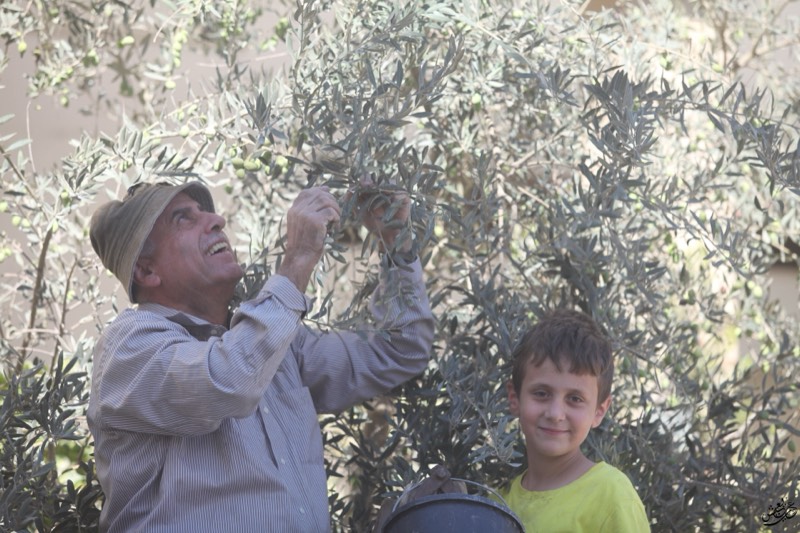
Olive harvest near Nablus — Oday yaish · CC BY-SA 4.0 · Photography & credits

Programme directions

During 2022, HDIP focused its programmes on three main areas: health issues, education, and social and economic justice — areas considered essential to achieving genuine community development and building a society in which individuals' basic needs are met.

HDIP placed particular emphasis on youth and women, considering them the groups most in need of support, advocacy, assistance and empowerment. Women account for more than 50% of the population, while youth of both genders represent approximately 75%, giving the institute an opportunity to reach the broadest possible segment of society.

Key figures

2022
  • 40,200books across eight community knowledge libraries
  • 1,920students reached through 230 training courses
  • 43graduation projects and theses supported
  • 80student volunteers running the libraries

PDF not yet supplied

Mechanism for implementing the objectives

01

Publishing and conducting research and studies

Research, studies and scientific projects supporting statistical programmes and university students' specialised projects.

  • Preparing research projects and proposals on community topics.
  • Conducting studies and assisting in their publication and dissemination.
  • Training students, particularly persons with disabilities and women, in conducting research.
  • A comprehensive study on development needs in Area C.
02

Adopting effective educational and health policies

Identifying priorities that require community attention and strengthening cooperation with governmental and civil society organisations.

  • Developing innovative models to follow up issues affecting youth and other groups.
  • Addressing health and education, media and social communication, poverty and unemployment.
  • Developing an integrated training programme supporting self-reliance in creating change.
03

Raising awareness of education

Facilitating students' access to information and services, and organising training courses across a wide range of subjects.

  • First aid, health education, languages and calligraphy, personal development, computers.
  • Summer camps, the use of Braille, human resources, handicrafts, media, project management.
  • Books, references, periodicals, photocopying and printing, and computer laboratories.
  • Workshops on psychological support, health, leadership and access to employment.
04

Working with marginalised areas

Workshops and campaigns in marginalised areas, coordinated with governmental bodies and civil society organisations. As a continuation of the Right to Higher Education Campaign, launched seven years earlier, awareness workshops were held for women, students and parents through municipal councils in 11 locations.

  • Joint activities with civil society organisations requiring field visits.
  • Courses on project development, literacy, working conditions and the role of women.
  • Raising awareness of the health environment in schools and marginalised communities.
  • Identifying the priorities and essential needs of marginalised communities.

Community research and knowledge libraries

  • Eight libraries, ~40,200 booksEstablished with approximately 15,000 books, later updated and expanded to roughly 40,200 — cultural and scientific books, references, periodicals, university textbooks and encyclopaedias across scientific, cultural, social, political, literary and legal fields.
  • Eight librarians and ~80 volunteersA team of eight trained librarians supported by approximately 80 university student volunteers who classify and organise books, lend to users and coordinate training courses.
  • 230 training courses, ~1,920 studentsCovering computer skills, first aid, scientific courses, languages, engineering, design and drawing, human resources, psychosocial support, scientific research, media and public relations, translation, life skills, music and remedial courses.
  • 43 graduation projectsUniversity students supported in completing graduation projects, master's theses and scientific research studies.
  • Right to Higher Education workshopsRun through the libraries on inclusion of persons with disabilities, educational policies in Palestine, the importance of scientific research, development of information systems, the status and quality of higher education, the role of civil society in educational policies, and freedom of movement and accessibility for persons with disabilities.

Library facilities and services

  • Electronic research roomComputers connected to the internet for educational and research use.
  • Training roomsUsed for educational activities and the screening of documentary films.
  • Catalogued collectionSystematically and electronically catalogued, with dedicated spaces for reading and research.
  • Lending, printing and coursesAcademic and cultural book lending, printing and photocopying, and specialised academic and skills-development courses. Priority is given to students from low-income families.

2022

40,200books across eight community knowledge libraries
1,920students reached through 230 training courses
43graduation projects and theses supported
80student volunteers running the libraries

Read another year

Annual reporting from 2022 onward sets each year's directions, activities and recommendations side by side.